We Rohingya Community Perspective on the Role and Activities of the Rohingya Solidarity Organization-RSO
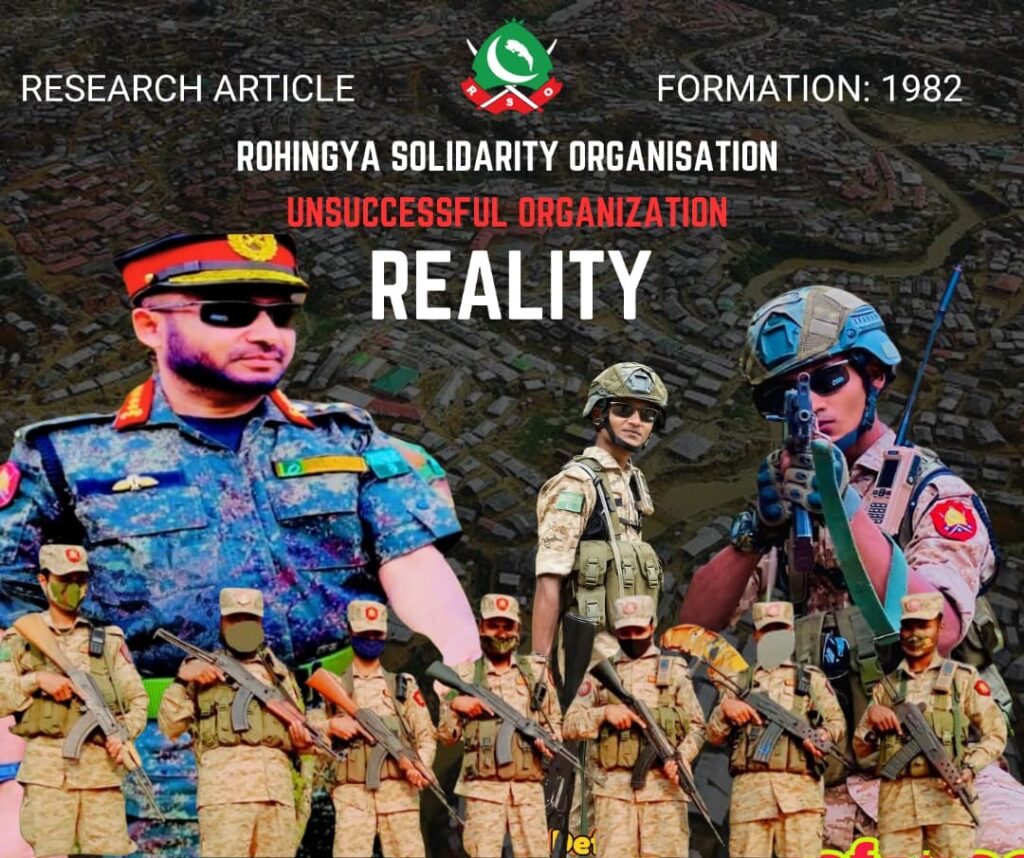
We Rohingya Community Perspective on the Role and Activities of the Rohingya Solidarity Organization (RSO)
The Rohingya community has faced for many decades of displacement, persecution, and genocide survivors. Various Rohingya organizations and groups have emerged claiming to try to reclaim the Rohingya right and dignity. Among them, the Rohingya Solidarity Organization (RSO), established in 1982, has reportedly operated mainly from the Chittagong Hill Tracts in Bangladesh. Some Rohingya community members claim that since its formation, the group has not operated effectively inside Arakan State and has done little to support the Rohingya community. Rohingya also accuse the group of spreading AI-generated or misleading images online, which makes confuses to the Rohingya community.
According to the understanding of Rohingya , the organization has provided no real benefit to Rohingya people and has instead created problems and divisions in refugee camps and other Rohingya areas.As a result, some community voices argue that the group has weakened the Rohingya struggle rather than strengthening it. Over the years, the activities, leadership, and overall impact of the organization have become subjects of debate among Rohingya people both inside Myanmar and in refugee communities.
This report presents a critical perspective shared by some members of the Rohingya community regarding the role and performance of the Rohingya Solidarity Organisation. The purpose of this report is not to promote division but to highlight concerns, encourage transparency, and advocate for more effective leadership and unity among groups that claim to represent the Rohingya cause.
We believe that there are many optimistic forces in Rohingya Solidarity Organizations (RSO ) who are working tirelessly for decades, and decades as well there are very good, patriotic, and brave. But one thing is that even they can make any difference among the Rohingya community. Only they are making some videos in the Chittagong hill tract and uploading it on social mixing with the help of artificial intelligence. These individuals truly want to work for the Rohingya community and protect the future of the Rohingya people. However, due to the lack of good and honest leadership, they cannot do anything meaningful. Their intentions may be good, but without proper direction and responsible leadership, their efforts remain useless. Even after 47 years, RSO has done nothing significant or practical for the Rohingya community. This long period should have produced real achievements, but instead there is disappointment among many Rohingya people.
My question is very simple and direct: What are you doing in the Chittagong Hill Tracts? What are your mission and vision? What is your future plan? For many years you have stayed there, but the Rohingya people have not seen any clear result. From our understanding, it seems that you are hopeless and that your activities are only business with the Rohingya community rather than real service to them. Instead of helping the Rohingya people achieve their rights, security, and dignity, many believe that you are only focusing on your own interests.
Now please leave the Rohingya alone. The Rohingya people have already suffered too much because of violence, displacement, and injustice. I believe that you cannot do anything positive with your current plans. Instead, your actions appear to be destroying the Rohingya community and also damaging other Rohingya armed groups who may be trying to work sincerely for the people. Many people believe that your mission is not to help the Rohingya struggle, but rather to weaken or destroy other real Rohingya armed groups. At the same time, it seems that you want to collect funds and budgets from international sources that other organizations receive for the Rohingya cause.
Claim, Commander-in-Chief of RSO Mr. Md Ayoub, is known by many people as a businessman involved in WY (Yaba). There are also accusations that he is involved in stealing chickens from village homes, stealing mobile phones, stealing bricks from Rohingya areas, and even stealing lamp posts from roads. In addition, there are claims that Rohingya students and innocent people have been kidnapped in order to demand money. These activities create fear and insecurity among the Rohingya community.
We have records of many activities that have been committed against the Rohingya community, including child marriage and the forced abduction of children from the camps. Such actions are deeply harmful and unacceptable for any community that is already suffering from displacement and hardship. Instead of protecting Rohingya people, these actions only increase their suffering.
Many people also believe that large amounts of money are being spent to influence Bangladeshi police and other authorities in order to escape pressure from other organizations and remain active inside the camps. By giving money to certain police officers and other government forces, it is believed that some groups try to maintain their position and avoid accountability.
There is also evidence and practical proof, according to some members of the community, that property and materials belonging to Rohingya refugees are being taken or stolen. Even fences and materials from Rohingya camp homes are reportedly being cut and taken away. These actions further damage the already fragile living conditions inside the refugee camps.
For all these reasons, many Rohingya people are asking serious questions and demanding accountability. They want leadership that truly serves the Rohingya community, protects their rights, and works honestly for their future rather than using the community for personal benefit.
Background of the Rohingya Solidarity Organization (RSO)
The Rohingya Solidarity Organization (RSO) was reportedly founded in 1982 with the stated aim of advocating for the rights and protection of the Rohingya people. Historically, the organization has been associated with activities along the Bangladesh–Myanmar border areas, particularly in the Chittagong Hill Tracts of Bangladesh.
Over the decades, several groups have emerged under different names claiming to defend the Rohingya cause. However, the actual effectiveness of these organizations has often been questioned by members of the Rohingya community.
Many Rohingya observers have pointed out that despite its long history, there is no real evidence of the organization operating effectively inside Arakan (Rakhine State) or making significant contributions to improving the situation of Rohingya people.
Concerns Raised by Members of the Rohingya Community
Within the Rohingya community, there are ongoing discussions about the role and impact of the RSO. Some community members claim that since its establishment, the organization has not achieved meaningful progress in advancing the rights or safety of Rohingya people.
One of the main thing is that the group has remained largely outside Arakan and has not established a strong operational presence there. According to these voices, the organization has not been able to build sustainable structures or activities within the region where Rohingya people historically lived.
Instead, critics claim that much of the activity associated with the group has occurred within Rohingya refugee camps. These camps, located mainly in Bangladesh, are already vulnerable environments where social stability and community unity are extremely important.
Some community members argue that rather than strengthening unity, the presence of multiple armed or political groups in refugee camps has sometimes contributed to confusion, insecurity, and divisions among Rohingya people.
Allegations of Internal Issues and Leadership Problems. Another major concern raised by some Rohingya community members relates to leadership within the organization. Critics argue that internal corruption, lack of accountability, and weak leadership have reduced the effectiveness of the group over time.
Many Rohingya observers believe that within the organization there are individuals who are brave, committed, and genuinely concerned about the future of the Rohingya people. However, they argue that these individuals are often limited by leadership problems that prevent the organization from functioning effectively. Some members of the community have also questioned whether the leadership is fully committed to the collective interests of Rohingya people. They claim that certain leaders have focused more on personal benefits rather than community development.
These concerns have led to growing frustration among some Rohingya community members who expected organizations like the RSO to play a stronger and more constructive role in defending the rights of Rohingya people.
Social Media and Information Concerns
Another issue raised by community members relates to the use of social media by groups claiming to represent Rohingya interests. Some Rohingya observers claim that images and information shared online by certain organizations may be misleading or artificially created.
In particular, there are allegations that some images circulated on social media are generated using artificial intelligence or taken from unrelated contexts. According to critics, this type of misinformation can create confusion among Rohingya people and damage the credibility of the broader Rohingya movement. The spread of inaccurate or misleading information may also affect how governments, international organizations, and humanitarian actors perceive the Rohingya community. This can potentially weaken advocacy efforts and create misunderstandings about the realities faced by Rohingya people.
Impact on the Rohingya Community
The Rohingya community has endured decades of displacement, statelessness, and humanitarian hardship. In such a situation, unity, responsible leadership, and credible representation are extremely important. Some Rohingya community members believe that internal divisions among organizations have sometimes weakened the overall struggle for justice and recognition. When multiple groups compete for influence without coordination, it can create confusion among Rohingya people as well as among international partners. Critics argue that instead of strengthening the Rohingya cause, these divisions may undermine collective efforts to advocate for rights, security, and a safe return to Myanmar.
Calls for Reform and Cooperation
Despite the mentioned above, many Rohingya community members still believe that positive change is possible if organizations adopt more transparent and accountable leadership structures. Rohingya Community have suggested that groups such as the RSO should engage with other Rohingya organizations and consider forming broader alliances or cooperative frameworks, it’s will be more beneficial for the Rohingya community. Through dialogue and collaboration, Rohingya groups could potentially coordinate their efforts more effectively and present a unified voice to the international community.
Community members have also emphasized the importance of leadership reform, improved communication, and stronger accountability mechanisms. As well as alliance with all Rohingya army group. These changes could help rebuild trust within the Rohingya community and improve the credibility of organizations claiming to represent Rohingya interests.
Community members believe that leaders must demonstrate integrity, transparency, and a genuine commitment to the welfare of the Rohingya people and be active in Arakan. Leaders must also be willing to listen to public and adapt their strategies to better serve the community and for early restore the Rohingya right and dignity.
Constructive and alliance leadership can help strengthen unity, improve the arm forces and international advocacy, and support efforts toward justice, recognition, and make restore the right and dignity. The Rohingya Solidarity Organization has been tricking for several decades with Rohingya vulnerable community. However, its role and effectiveness remain subjects of debate within the Rohingya community. Some community members believe that the organization has not fulfilled the expectations placed upon it and that internal leadership problems have limited its effectiveness. Others believe that reforms and cooperation with other Rohingya groups could help the organization play a more positive role in the future and regain our rights and dignity.
Ultimately, the Rohingya struggle requires unity, responsible leadership, and credible representation. Organizations that claim to represent the Rohingya people must prioritize transparency, accountability, and cooperation in order to truly serve the interests of the community.
Constructive dialogue, leadership reform, and collaboration among Rohingya groups may help strengthen the collective effort to achieve justice, dignity, and a secure future for the Rohingya people.
Murder and business of Rohingya solidarity organisations
Mr. Mohammad Ayub, who claims to be the Commander-in-Chief of the Rohingya Solidarity Organization, is involved in various illegal activities and is exploiting the Rohingya community. He orchestrates attacks on the group and is involved in drug trafficking, human trafficking, and selling the Rohingya people into the hands of terrorists Arakan Army AA. Despite these allegations, he falsely presents himself as a leader of the Rohingya people. Furthermore, he holds Bangladeshi nationality, but this assertion that he is a Rohingya leader with Bangladeshi citizenship, is a complete fabrication and a blatant lie.
Mv Md Noor, Vice Commander in Chief of the Rohingya Solidarity Organization (RSO), he resides inside the Rohingya camp. However, he is involved in various forms of attacks and aggression against the Rohingya community in different ways, and he is also engaged in various illegal activities including narcotics.
- Ko Ko Linn (Kalim), originally from Ngan Chaung Tract, Northern Maungdaw Township, Arakan State, Myanmar, is reportedly living in Bahaddarhat, Chittagong, Bangladesh. He is the formar president of the Rohingya Solidarity Organization (RSO) and is alleged to be involved in activities that contribute to violence and instability in Rohingya refugee camps. He reportedly ordered his forces to kidnap Rohingya youths, including students such as those studying for MV and master’s degrees. He also allegedly said that children should not work and that students, teachers, and employed people should be captured. According to these claims, the victims or detainees were to be sent to Myanmar. At that time, among the Rohingya youths, including children, about 70 people reportedly died, and around 300 were sent, among whom more than 70 were reported dead. Source: Rohingya community, 6 Nov 2024
- On 4 October 2024, two Rohingyas were killed during the attacking on Arakan Rohingya Salvation Army by Rohingya Solidarity Organization in refugee camps in Ukhiya, according to Armed Police Battalion.
The victims were Yousuf (known as) Chakmaiya (32), around 2:00 am at Camp 8 West, and Arafat Hossain (15), a RSO supporter killed at around 5:00 am at Camp 15. Police said the second killing was likely a revenge attack, creating tension across the camps. Source: The daily Star
- On 5 December 2024, three Rohingya were killed during attacking of gunfire to Arakan Rohingya Salvation Army by Rohingya Solidarity Organization at Camp 15 in Ukhiya.
- The victims were Abul Kashem (35), Md Jobair (16), and Joynal Uddin (27). The clashes occurred in C-77 and G-3 blocks between 7:30 pm and 9:00 pm, reportedly over control, drug trafficking, and previous enmity, according to the Armed Police Battalion.
Police said several others were injured, and the bodies were sent to Cox’s Bazar Sadar Hospital for autopsy. Authorities also reported that at least 74 Rohingyas were killed in 61 incidents of camp violence in the previous eight and a half months. Source: Protom Alo - On 17 June 2024, a report by Rohingya Refugee News (RRN) claimed that members of the Rohingya Solidarity Organization in Camp 1, Ukhiya were allegedly involved in filing false cases against Rohingya refugees who protested against forced recruitment of youths. The report said nearly 50 people in Camp 1 and over 500 refugees overall were reportedly targeted with murder charges.
The report also mentioned Head Majhi Jahangir and RSO commander Saddam as key figures allegedly linked to the recruitment efforts. Viral audio clips attributed to Jahangir reportedly threatened protesters and warned that continued opposition could lead to severe consequences.
Some Rohingya refugees interviewed in the report also alleged that certain security agencies, including the Directorate General of Forces Intelligence, National Security Intelligence, and Armed Police Battalion, were connected to these activities. However, some commenters disputed the authenticity of the audio recordings. Source: Rohingya refugee news - On 8 October 2023, the Armed Police Battalion (APBn) detained three suspected members of the Rohingya Solidarity Organisation during a night operation at Unchiprang Rohingya Camp (C/5 Block) in Teknaf around 1:30 am.
The detainees were Kamal Hossain (27), Ajiur Rahman (18), and Mujibur (18). Police recovered three locally made guns and 146 rounds of bullets. According to APBn officials, the suspects admitted during initial questioning that they were members of the RSO. They were later handed over to Teknaf Police Station after a case was filed. Source: The Business Standard, 9 October 2023. - On 18 January 2023, fighting broke out between the Rohingya Solidarity Organisation and Arakan Rohingya Salvation Army near the Tumbru zero line border area. The gunfight left one person dead and two injured, and a Rohingya camp was set on fire, destroying about 80% of the houses. Fearing further violence, around 30–50 Rohingyas, including women and children, fled to nearby shelters in Naikhongchhari, Bandarban. Authorities including BGB, RAB, and police increased security in the border area. Source: Dhaka Tribune, 19 January 2023.
- On 27 February 2023, reports stated that Ko Ko Linn, a leader of the Rohingya Solidarity Organisation, circulated an audio message urging his followers to carry out mass killings of members of the Arakan Rohingya Salvation Army in the refugee camps of Ukhiya. The recording reportedly appeared after the destruction of the “Zero Point” Rohingya camp on 18 January 2023, raising concerns about RSO activities in the camps. Source: South Asia Terrorism Portal (SATP), citing Dhaka Tribune, 26–27 February 2023.
- On 5 March 2025, Mohammad Nur (30), a member of the Rohingya Solidarity Organisation and head majhi, was stabbed to death at Block M of Camp-20 in Ukhiya around 8:30 pm. Police said four to five attackers with sharp weapons carried out the attack while he was returning from his grocery shop.
Authorities arrested Md Mozammel (32) in connection with the case and filed a murder case against 13 suspects. Some police officials and local residents claimed the attackers were linked to the Arakan Rohingya Salvation Army, though the investigation was ongoing.
newagebd.net. Source: New Age, 5 March 2025.
- On 6 February 2024, Mohammad Jalil (35), a member of the Rohingya Solidarity Organisation, was kidnapped and shot dead in Kutupalong Camp-4, Ukhiya.
According to the Armed Police Battalion (APBn), 15–20 armed members of Arakan Rohingya Salvation Army abducted three Rohingyas from Block F around 4:30 pm and took them to nearby hills. Jalil was later shot in the head, and his body was found at a football ground early Tuesday. Police sent the body to Cox’s Bazar Sadar Hospital for autopsy and launched operations to arrest those involved. Source: Prothom Alo (English), 6 February 2024. - On 18 March 2025, Md Harun (32), a member of the Arakan Rohingya Salvation Army, was killed at Hakimpara Rohingya Camp-14 (Block E-3) in Ukhiya. Police said the attackers were believed to be members of the Rohingya solidarity organisations RSO.
Authorities detained Badshah Mia, a resident of the same camp, in connection with the incident. Police reported that Harun had previously left RSO and joined ARSA, which was believed to be the reason for the attack. His body was sent to Cox’s Bazar Sadar Hospital for autopsy, and operations were launched to arrest the remaining suspects. Source: 18 March 2025 (citing The Daily Star). - On 23 May 2024, reports from refugees claimed that members of the Rohingya Solidarity Organization abducted more than 30 Rohingya youths from Kutupalong Refugee Camp and attempted to send them for military use by the Tatmadaw. Refugees said camp residents intervened, rescued several youths, and over 10 suspected RSO members were detained and handed over to Bangladeshi police. Some refugees also claimed that more than 200 Rohingya had previously been abducted in similar incidents. Source: Dhaka Tribune, “Rohingya families torn apart by conscription,” 17 May 2024._
- According to some members of the Arakan Rohingya Army (ARA), they fought for three days (Bilasor Diya ) with Arakan Army terro’rist and claimed that they won the battle. At that time, they stayed in Bilisordia for about 15 days. During the fighting, the western side was occupied by the Rohingya Solidarity Organization (RSO). ARA did not launch an ambush from the western side because they believed that RSO fighters were also Muslims and would not attack them.
However, later the RSO also attacked them. They were unable to defeat the Arakan Army (AA) terrorists. When the AA forces were about to fail, they discussed the situation with the RSO. At the same time, the RSO attacked ARA, while the AA attacked using drones simultaneously.
Early in the morning, before sunrise, the RSO began continuous firing from the western side, from another direction. If the firing had continued for a longer time, some of the ARA forces might have been killed by the RSO attacked. However, when the sun rose, the RSO stopped firing. Behind the failure of Arakan Rohingya Army is RSO, they attacked , even though they were also a Muslim armed group. - Between 2023 and 2024, “Ko Ko Linn (Kalim) has commanded ,around 350 Rohingya youths, including Molobi, students, Master and other students, were reportedly sent away. Many of them have still not returned. Local Rohingya from Arakan State claim that these youths were later killed by the Myanmar military. It is alleged that they were sent by RSO.
- In 2024, at Camp 3, Block A2, Shomsu Alom was reportedly brutally beaten and forced to pay 20,000 taka. This information was reported by the Block Majhi.
- On 12 June 2024, in Camp 5, Block unknown, a resident named Harun was reportedly called by some individuals who told him that his brother had sent money from Malaysia and asked him to come and collect it. When he arrived, they allegedly took a large amount of money from him, beat him, and threatened that they would hand him over to the police. The incident was later reported by local residents in the camp.
- 7–8 March 2025: Members of the Rohingya Solidarity Organisation were involved in armed clashes in Camp-10 and Camp-8E in Cox’s Bazar refugee camps, where gunfire erupted during a confrontation between armed groups. During the incident, several people were injured and a Rohingya refugee was killed after being struck by a stray bullet. Source: Rohingya Khobor, 9 March 2025.
- March 2025: Armed activity involving the Rohingya Solidarity Organisation was reported in Rohingya refugee camps in Cox’s Bazar, including violent incidents and clashes in the camps. Source: Armed Conflict Location & Event Data Regional Overview Asia-Pacific: April 2025, published on Relief Web._
- 2 October 2024: Members of the Rohingya Solidarity Organisation were involved in a gunfight in Ukhiya Rohingya camps (Camp-14 and Camp-15). During the clash, Andur Rahman, son of Mohammad Abdullah and a resident of Camp-14, was killed and five others were injured. Source: The Business Standard, 2 October 2024._
- 2 July 2024: Members of the Rohingya Solidarity Organisation were involved in an armed clash at Camp-14 (E/3 Block) in Ukhiya. During the gunfight, Md Delim (18), son of Moulvi Makbul from Hakimpara camp, was shot and killed, and three others were injured. Source: The Business Standard, 2 July 2024.
- On 5 March 2023, a massive fire in a Rohingya refugee camp in Ukhiya destroyed about 2,000 shelters and left around 12,000 Rohingya homeless. Camp sources said the incident was linked to the Rohingya Solidarity Organisation, who had been fighting for control of parts of the camp. Authorities suspected the fire might have been sabotage and launched an investigation. Source: The Daily Star, 6 March 2023.
- May 30, 2024: RSO was blamed for the killing of two students and a teacher in a refugee camp for refusing to join the group to fight the Arakan Army (Wikipedia).
- 4 October 2023: An Rohingya Solidarity Organisation member named Arafat was stabbed to death around 5:00 am in Camp-15. The killing occurred after earlier violence in the Rohingya camps, when members of a rival armed group attacked the area following clashes during the night. Source: Prothom Alo (English), 4 October 2023.
- 5 December 2023: Members of the Rohingya Solidarity Organisation were involved in an exchange of gunfire in Camp-15, particularly in C-77 and G-3 blocks. The incidents resulted in three Rohingya deaths—Abul Kashem (35), Md Jobair (16), and Joynal Uddin (27)—and several others were injured. Police later sent the bodies to Cox’s Bazar Sadar Hospital for autopsy. Source: Prothom Alo (English), 6 December 2023.
- 5 March 2023: Members of the Rohingya Solidarity Organisation were involved in ongoing clashes inside Ukhiya Rohingya camps, particularly in Camp-11 (Blocks A, B, and D). The conflict between armed groups was linked by camp sources to a major fire that destroyed about 2,000 shelters and left around 12,000 Rohingya homeless.
Authorities suspected the fire might have been intentional sabotage and launched an investigation. Source: The Daily Star, 6 March 2023.
Some others reported
30 April 2018 – Local shopkeepers report extortion attempts by unknown armed men demanding protection money under RSO.
11 June 2018 – A community volunteer disappears near the forest edge of the camp and is later released after negotiations.
2 September 2018 – Armed clashes between two two groups damage several shelters in camp 5.
18 November 2018 – Camp elders hold a public meeting calling for unity and peace.7 January 2019 – Security patrols increase after reports of illegal weapons appearing inside the camps.
20 March 2019 – some of Rohingya refugees report forced recruitment attempts targeting young men in the refugee camp.
14 May 2019 – Several night markets close early due to rising fears of RSO.
3 August 2019 – Authorities investigate a small smuggling route operating through nearby hills.
27 December 2019 – Community leaders organize a youth awareness program against armed recruitment and public watch for their torture.
19 February 2020 – Aid workers report to RSO groups over control of certain camp.
6 May 2020 – Armed individuals allegedly steal food aid from a distribution warehouse.
22 July 2020 – A teacher in the camp school kidnap and threats after speaking against RSO.
4 October 2020 – A late-night fire destroys several temporary shelters in camp-7 during the conflict others group.
12 January 2021 – Authorities launch a security operation after reports of increased armed activity in the camp.
11 March 2022 – Refugees report the expansion of illegal trade networks around camp markets.
24 June 2022 – A group of young refugees are reportedly pressured to join an armed group RSO
17 December 2022 – Security forces dismantle a hidden weapons storage site near the forest edge.
8 February 2023 – Refugee community members protest against violence inside the camps due to torture of RSO.
15 May 2023 – Armed confrontations between RSO and ARSA damage to multiple shelters.
21 September 2023 – Aid organizations warn about growing criminal networks targeting refugees.
From 2012 to present , Residents in several areas reported that chickens and other livestock were stolen from local households during the night. Community members alleged that individuals believed to be connected with RSO were involved in these incidents in villages near the camps. The reported thefts have raised concern among residents who rely on small livestock and pets for food and livelihood, creating fear and insecurity within the community. Source: local villagers
Conclusion: The Rohingya community continues to face immense challenges due to decades of persecution, displacement, and statelessness. In such a fragile situation, unity, responsible leadership, and trustworthy representation are essential for protecting the rights and dignity of Rohingya people. However, many members of the community have raised concerns about the role and effectiveness of the Rohingya Solidarity Organization.
According to various community perspectives and reports, the organization has been criticized for its limited impact in improving the conditions of Rohingya people or establishing a meaningful presence in Arakan State. Instead, much of the activity linked to the group has reportedly taken place inside refugee camps in Cox’s Bazar, where the presence of armed groups has sometimes contributed to insecurity and division among refugees.
These concerns have led many Rohingya community members to call for greater transparency, stronger leadership accountability, and improved cooperation among Rohingya organizations. A more united and responsible approach could help rebuild trust within the community and strengthen efforts to advocate for Rohingya rights, justice, and safe return to their homeland.
Ultimately, the success of the Rohingya struggle will depend on unity, credible leadership, and collaboration among all groups working for the welfare of the Rohingya people.
Thank You